Painting Chickens in China
Shanghai 2019
A brave adventure I shall never forget.
We first met in April 2017 at a lunch provided by the Sun River tea company in Huangshan, Anhui province. We sat next to each other at a large round table with a revolving centre and it was a sumptuous feast.
I was there as part of a small group from the UK on a two-week tour of tea gardens and factories – big and small – in several provinces. She was there doing a demonstration of Chinese brush painting for the factory workers. Her speciality was the Flowers and Birds genre.
We were of a similar age and we took to each other straight away; with only a basic Chinese repertoire on my part, and no English on hers, we communicated mostly by showing each other photos; our children, followed by her paintings. Her daughter had worked for a bank in London for a time, and she’d been there to visit. I admired the paintings she showed me and said I’d love to learn. I showed her some paintings I’d done with Chinese brushes after returning from my month in Beijing in September 2015.
The lunch came to an end, but not before we’d exchanged contact details and she’d offered to give me some painting lessons in the genre she’s renowned for. She also presented me with a painting of a rooster that I treasure to this day.
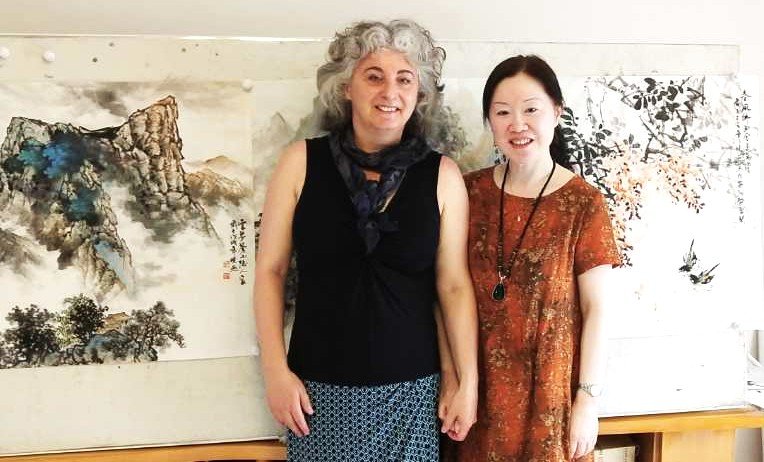
Her name is Wáng Xiǎo Yàn 王晓燕, known online as Xuě Qiān Xún 雪千寻, a history-teacher-turned-artist based in Wuhu, Anhui province; an active, exhibiting prize-winning artist and member of several artists associations in the province.
Two years later, on Wednesday 22nd May 2019, I got on the 10:29 bullet train from Hongqiao railway station in Shanghai with my flask of oolong tea. I was feeling anxious and highly-strung. Sleep had been impossible the previous night, and my mind was gnawing away at all the things that could go wrong – starting with getting on the wrong train!
Hongqiao railway station was opened in July 2010 and has the feel of an airport terminal. I arrived with plenty of time to spare, and spent it mostly with eyes riveted to the departure board. As it turned out, all went very smoothly and my train left on time. The train pulled in to Wuhu station at 13:19 and I made my way to the exit, looking around for Xiǎo Yàn. We saw each other, rushed up to say hello, felt embarrassed because neither of us were able to communicate efficiently with each other in words, and then simply held hands.
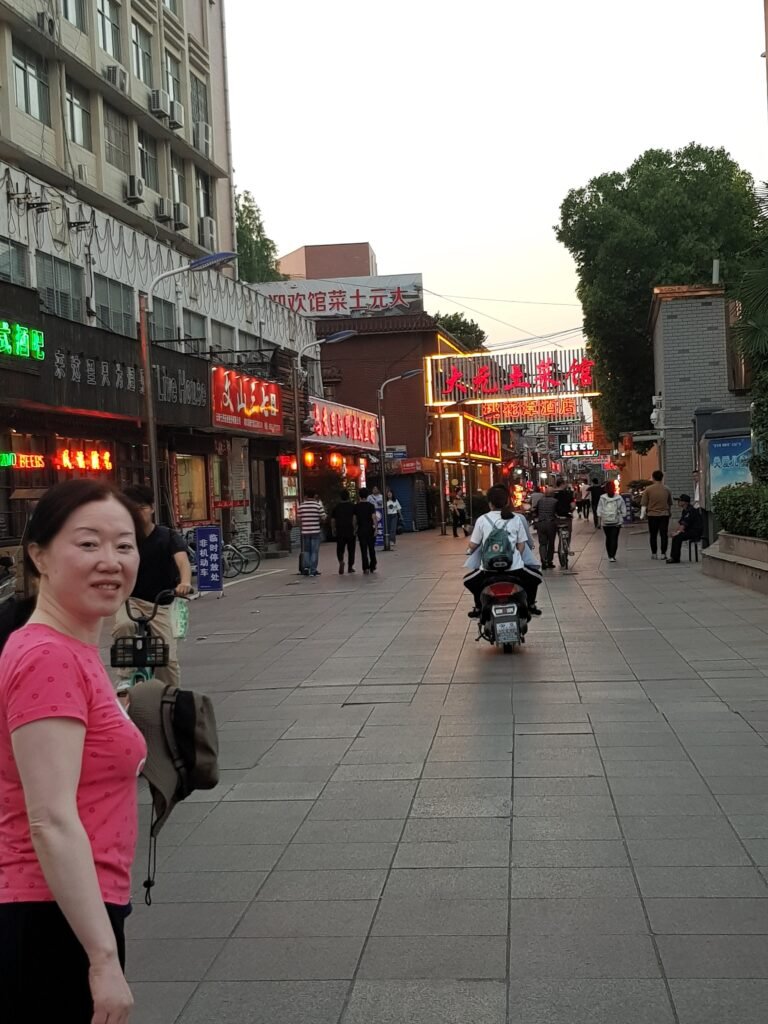
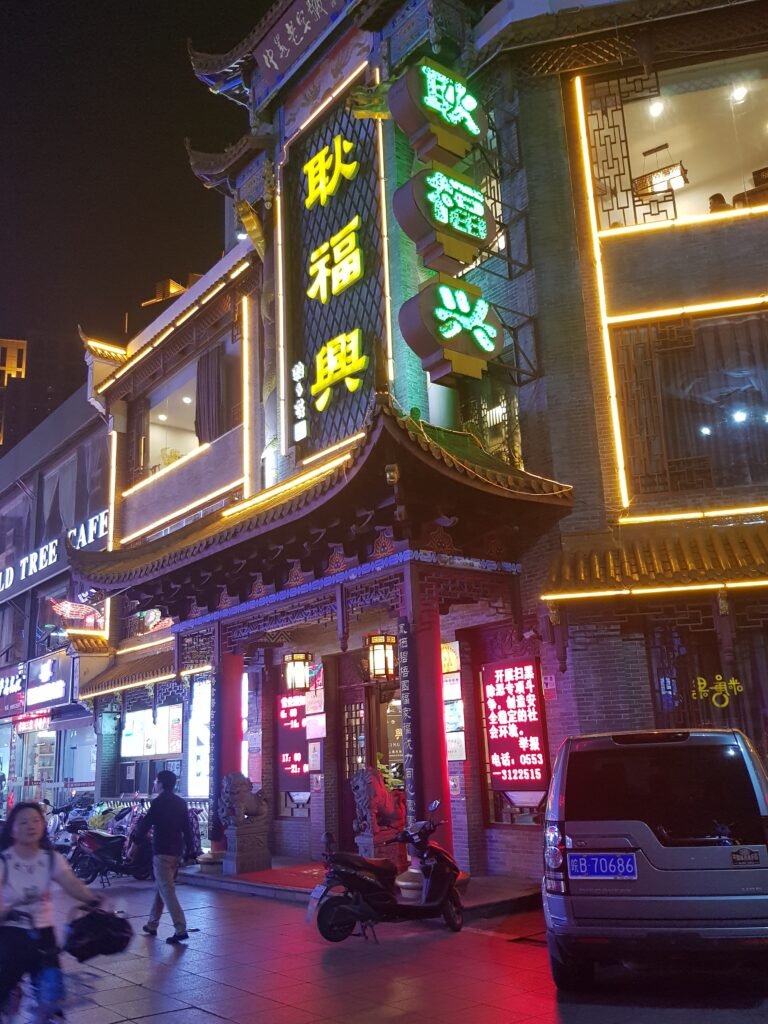
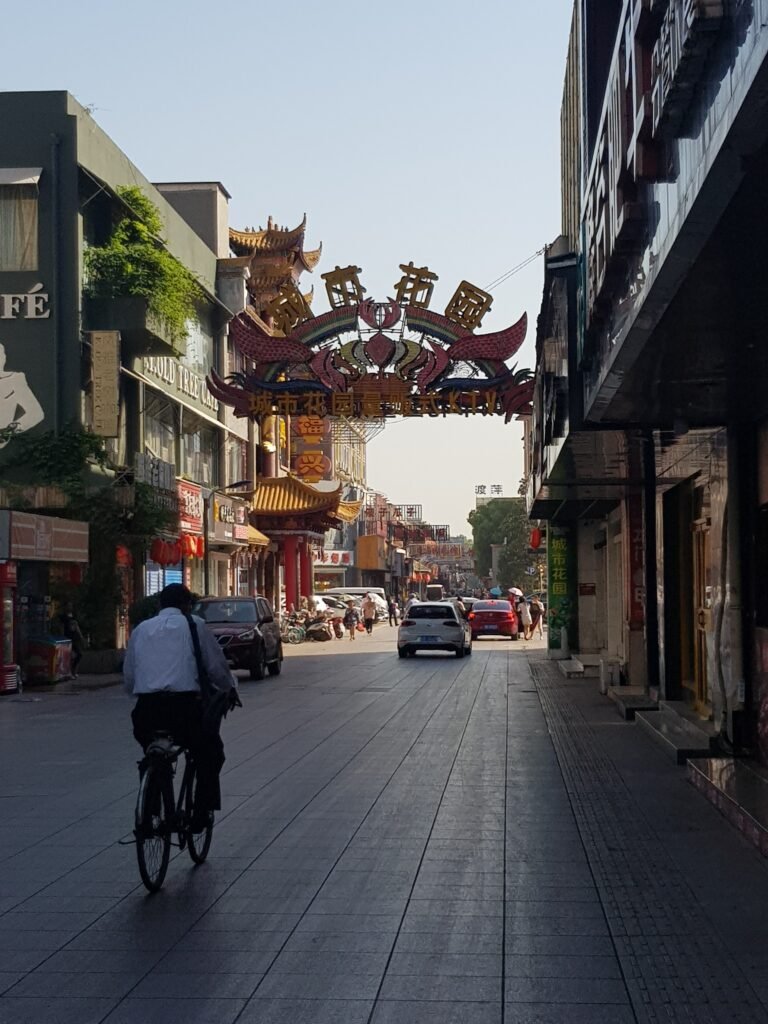
Xiǎo Yàn had driven to the station to collect me with her husband, and they dropped me off at my hotel, agreeing to meet for supper later. I’d conveniently booked a room in a hotel right next to “Gourmet Street” so I didn’t have far to go for supper at a restaurant serving local Anhui cuisine. Her daughter, called “Lemon” came and was a helpful interpreter. Through Lemon, I learnt that Xiǎo Yàn was worried about how we would communicate during the lessons; with Lemon’s help I was able to reassure her that we would manage. Just watching someone demonstrate techniques, I said, would be helpful enough for me. Before we parted, after the meal, we had a walk around a nearby park, and she also showed me the way to her home. It was luckily only going to be a 10-minute walk from the hotel, and very easy to remember the way.
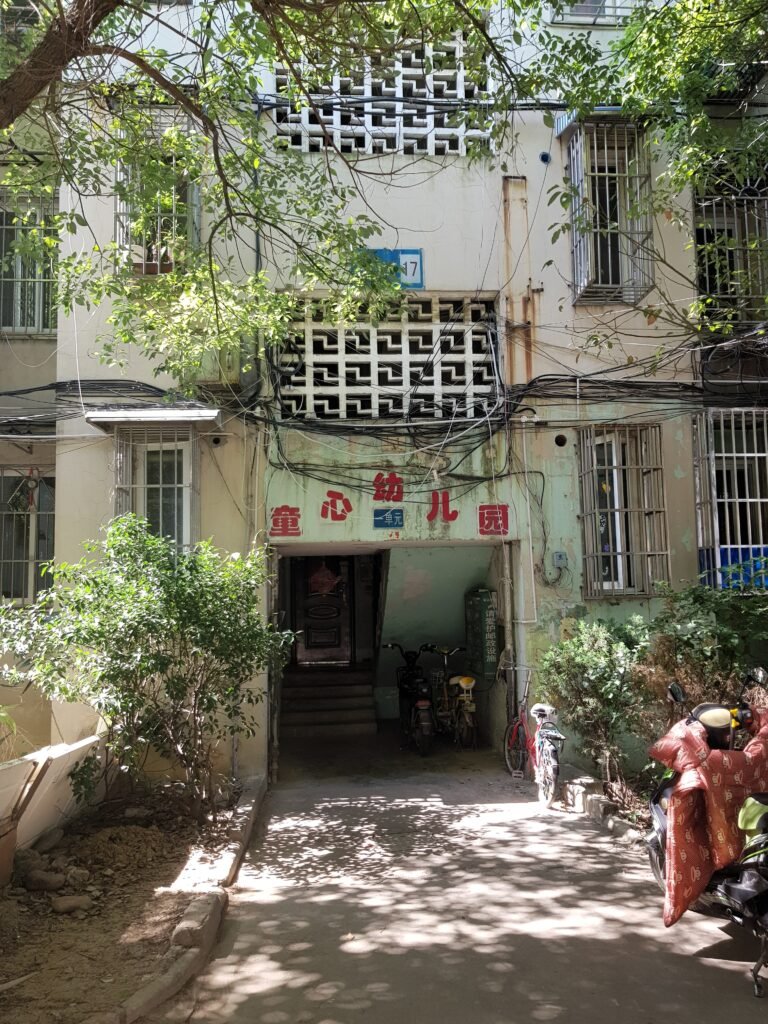
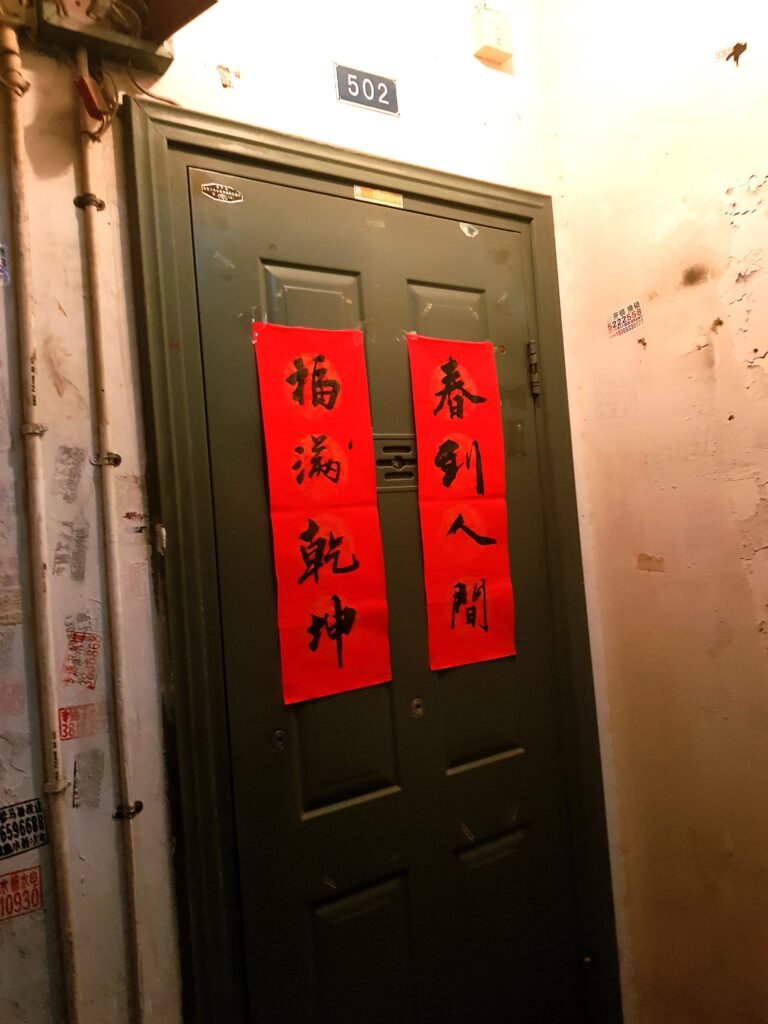
The next morning, I walked down Gourmet Street, past the park entrance gates, past the shop with the red lanterns outside, crossed the road using the pedestrian crossing, turned right and immediately left after the building with the red flag. I saw their car parked in the street and made my way up the steps in what we would perhaps consider a run-down tenement building, and knocked at the metal door on the fifth floor.
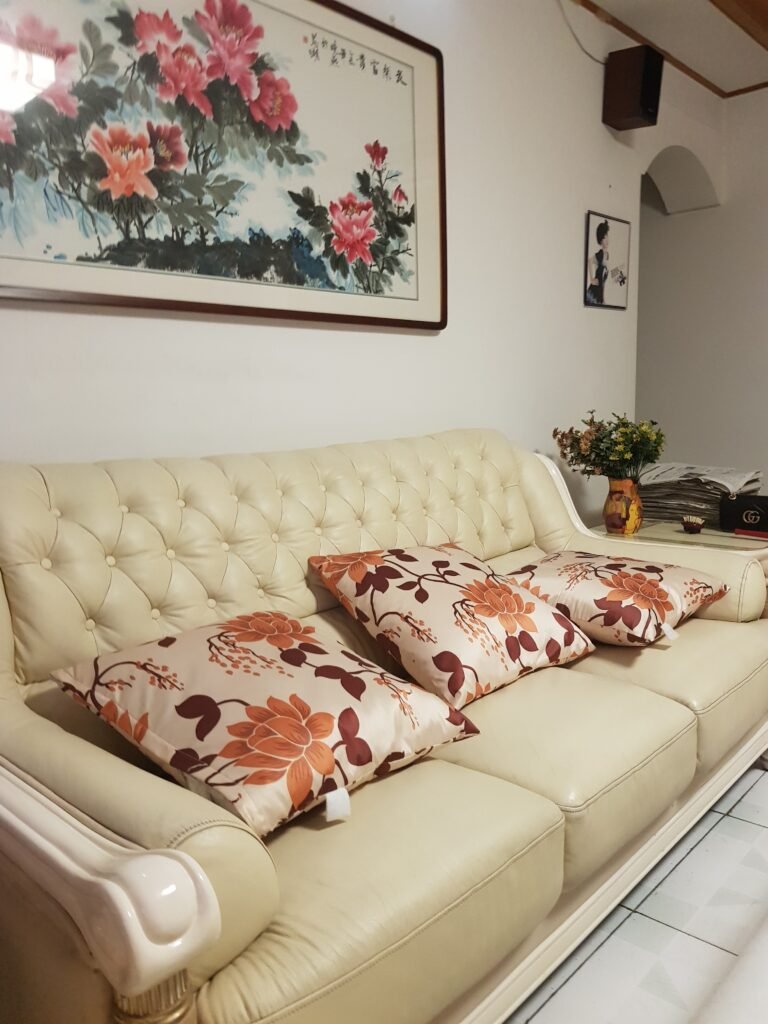
Inside, the apartment looked plush and bright with white marble floor tiles, white-painted walls and cream-coloured leather sofa and chairs. The walls were hung with her paintings, which were impressive. We would be painting in the lounge, on a low coffee table. It was hot and very humid. Mr Wang disappeared to the bedroom, and it became apparent that he was going to stay in there for the duration of the lessons, appearing only to make us tea and cook lunch. He spent his time in the bedroom learning the days of the week in English and the numbers, and at lunch I helped him with his pronunciation.
I was to have 5 days’ tuition:
Day One
Bamboo – arrangement of leaves and “bone stroke” for stem;
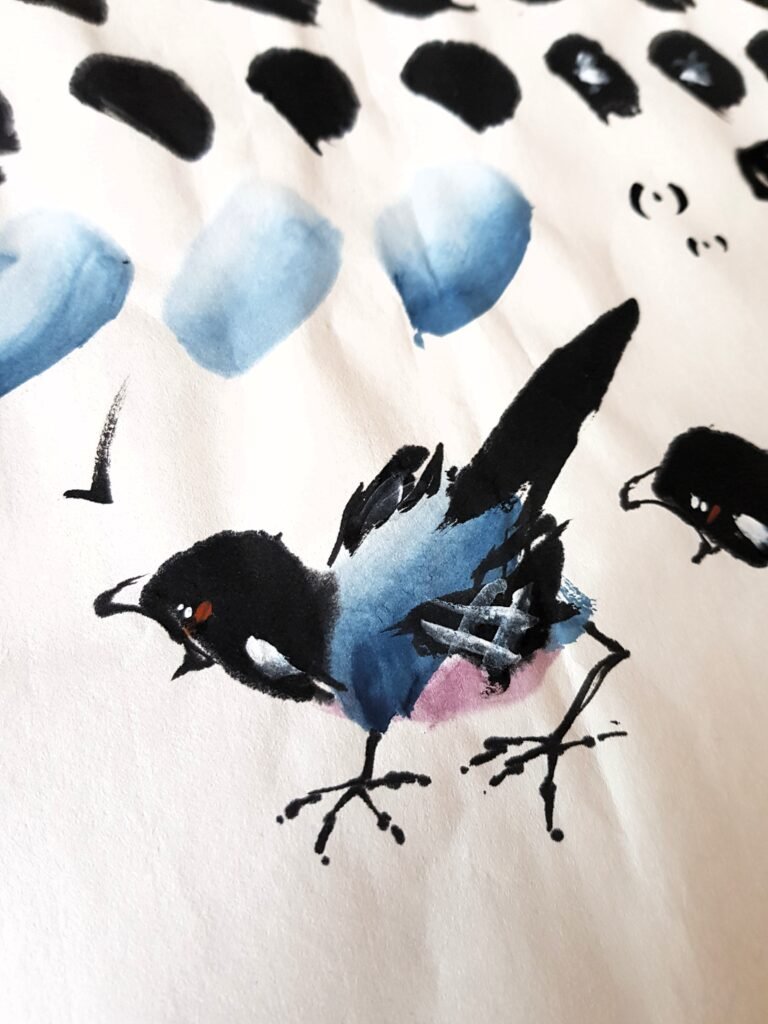
Head and body of small bird – loading coloured ink onto the brush, shape and angle of beak, leg and claws.
Day Two
Another very hot, humid day. Both of us sweating profusely.
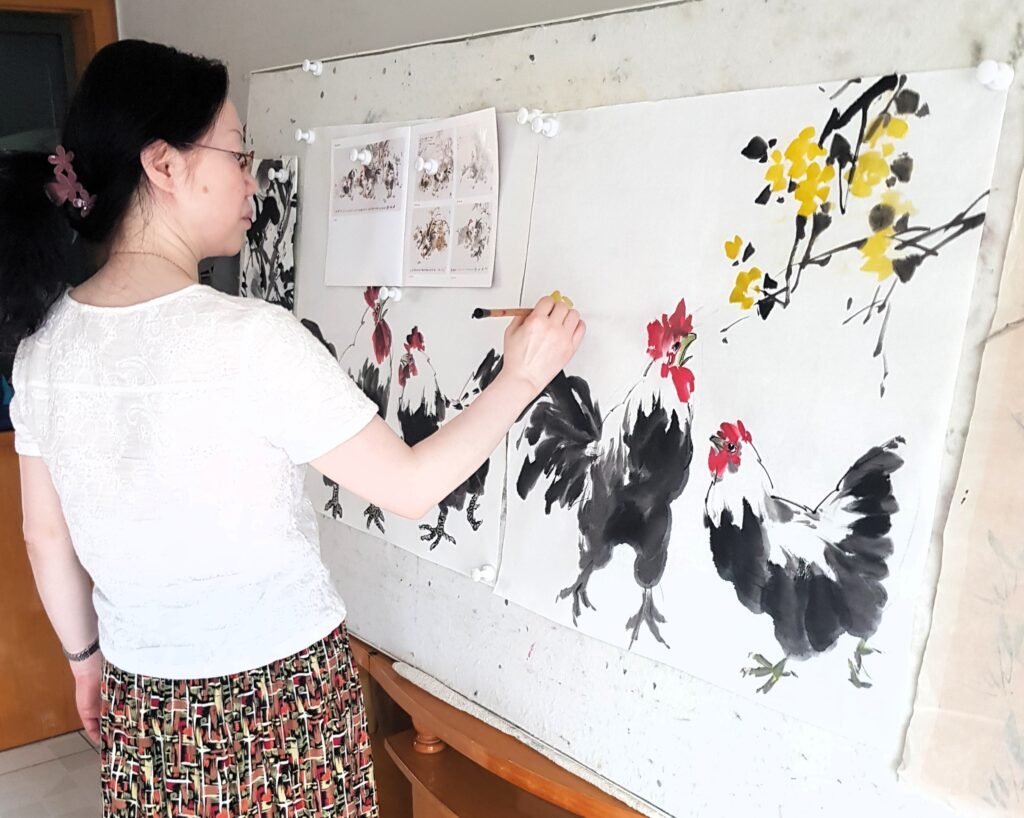
Chickens and cockerels – probably my favourite day of the five, as the larger birds were very gratifying to paint.
I was given paper, brush, ink and paints to do homework in the hotel, and didn’t have time or inclination to go for supper in the nearby restaurant. I was determined to arrive the next morning with something worth showing.
I finally worked out how to switch the air conditioning unit on!
Day Three
Heavy rain downpour all day. I arrived for my lesson at 08:30 with sopping wet shoes.
Wisteria with little birds, and drawing to strengthen line – this is the day I had to grasp the concept of quēkǒu 缺口 – leaving space in a painting is an important element of Chinese brush painting.
I struggled a bit at the start to make my wisteria racines look natural. Xiǎo Yàn was a traditionalist in her approach to teaching and did not believe in sparing me with critique: “it look like banana!” (sic) she said of one of my attempts – using an interpreting tool on her phone. Another time she grabbed my hand and forced my brush to do what she wanted, which was quite unnerving.
I was more than slightly in awe of Xiǎo Yàn as I watched her demonstrate; the elegant way she held the brush and directed the stroke presented a huge challenge for me. An added difficulty was watching her paint with her right hand and then transfer the technique to my left.
Day Four
We painted until lunchtime, as Xiǎo Yàn had to go and help an elderly aunt in the afternoon for a few hours.
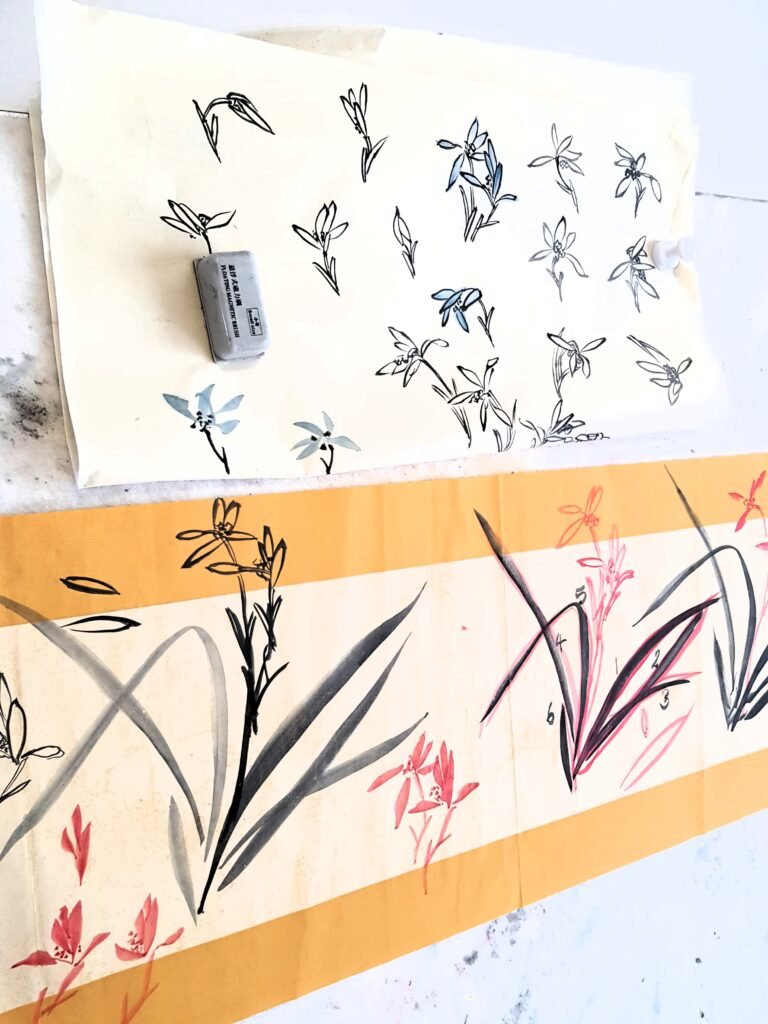
After some brutal feedback on my wisteria and small birds homework, I learnt how to paint orchids. I enjoyed the rhythmic stroke required for this, and it was one of the first things I continued to practise painting when I got home to Dorset.
After lunch, Mr Wang and Lemon took me to the newly-built Wuhu Museum, which they were proud of.
Wuhu, I learnt, was formerly known as Jiuzi and was founded in the Western Han dynasty. Connected by lakes Taohu and Chaohu with the mighty Yangtze River, Wuhu has a history steeped in river trade from crops grown in the fertile soil of the flood plains, mining from nearby Dagong Mountain and textiles. Mr Yan explained he’d been the manager of a textile mill before retirement.
Day Five
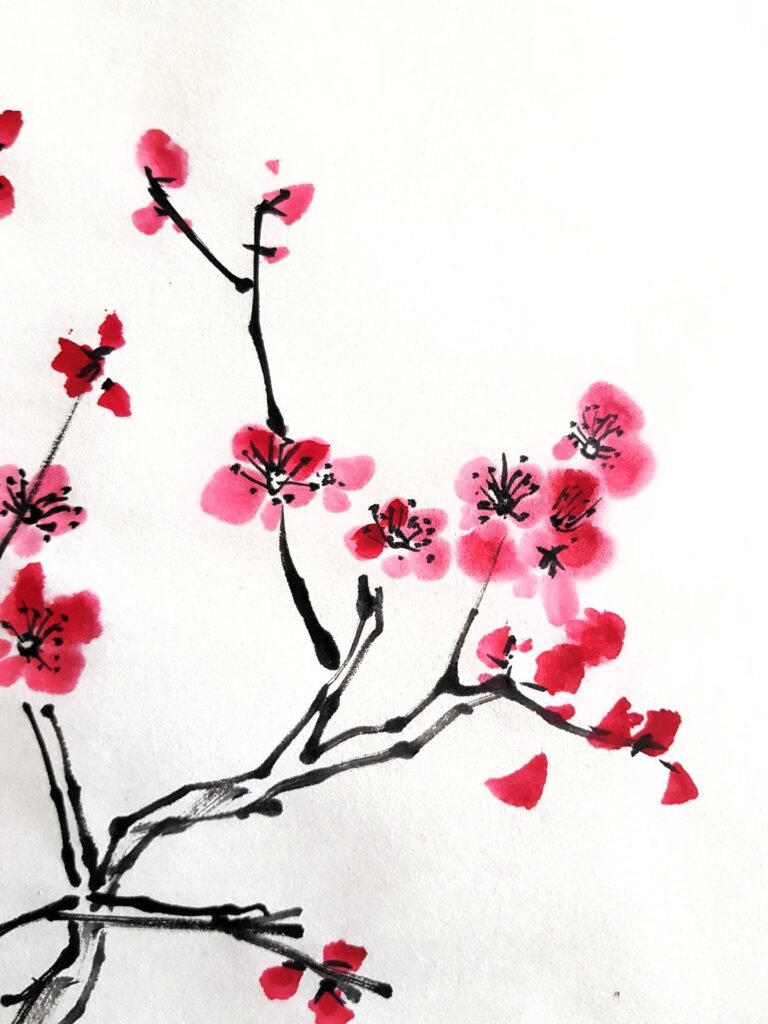
We focused on painting plum blossom, as well as trees in a scene with cottage and snow.
By this time Xiǎo Yàn and I felt completely comfortable with each other, enough to sing and laugh and fully enjoy our final day.
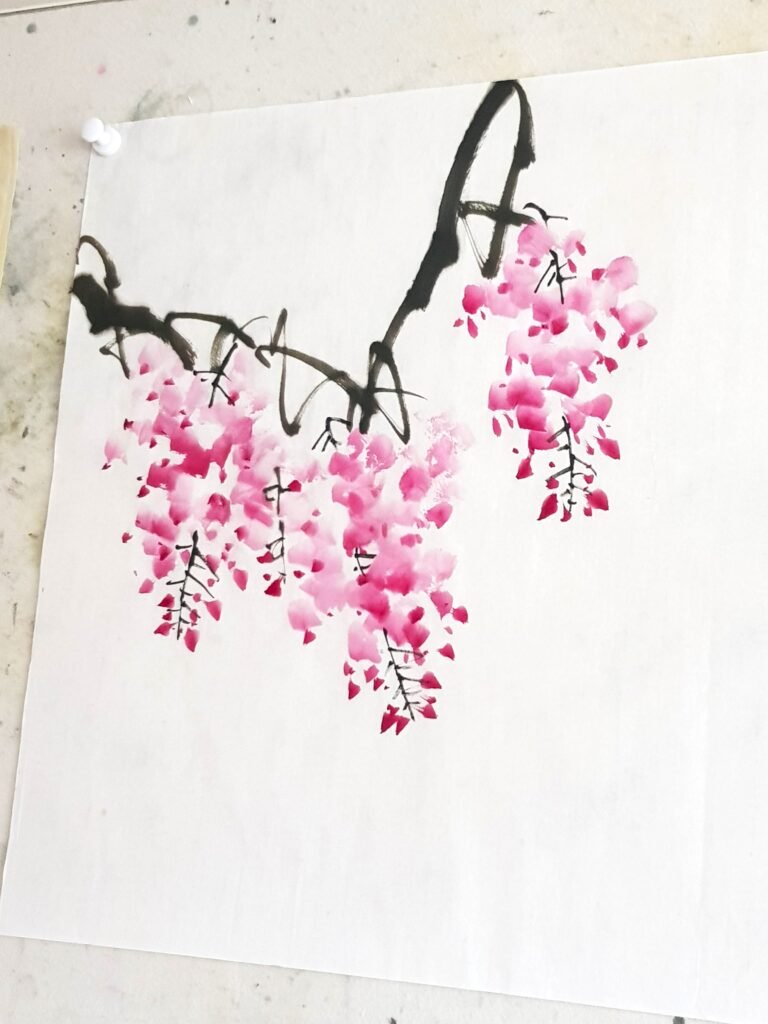
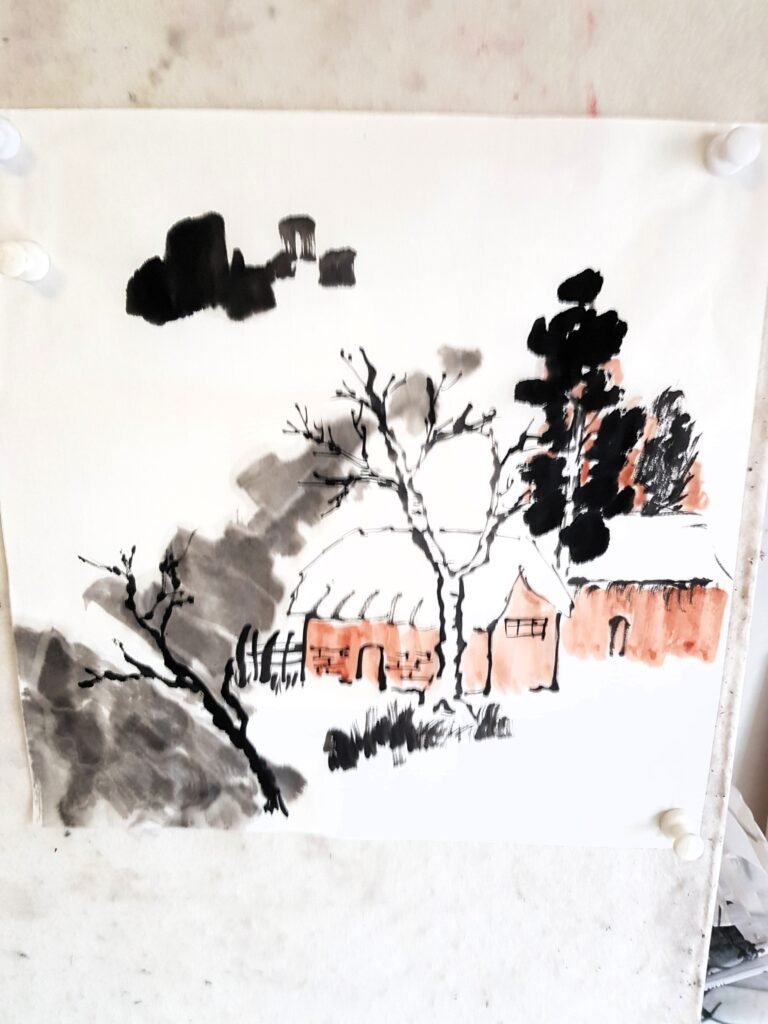
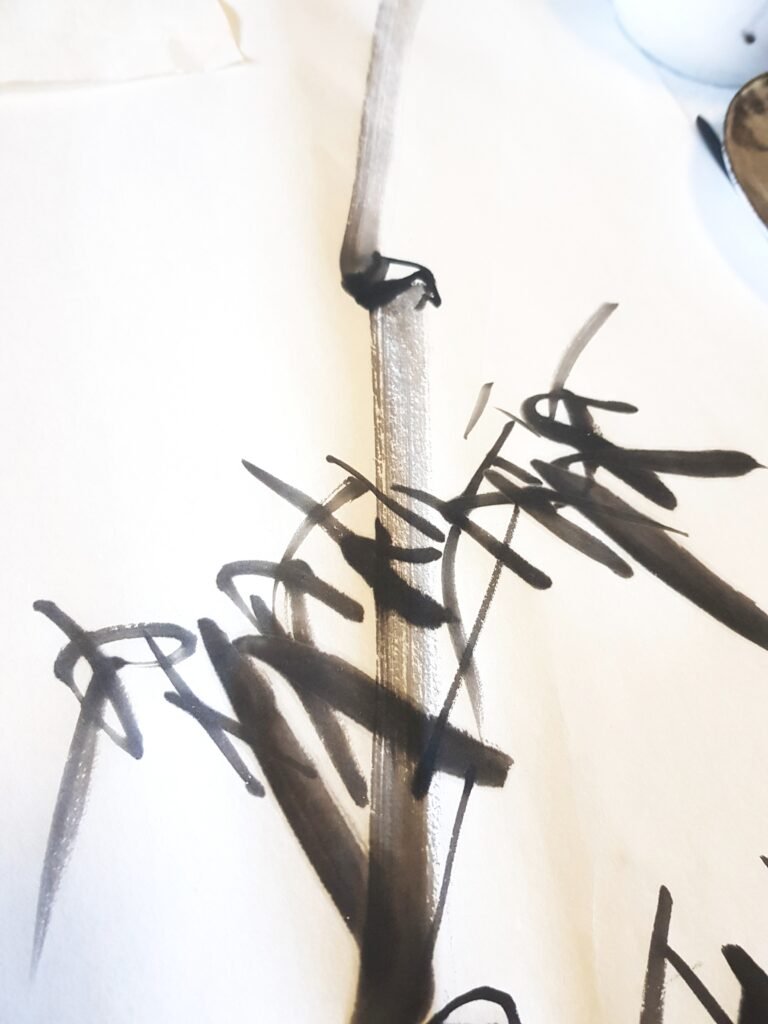
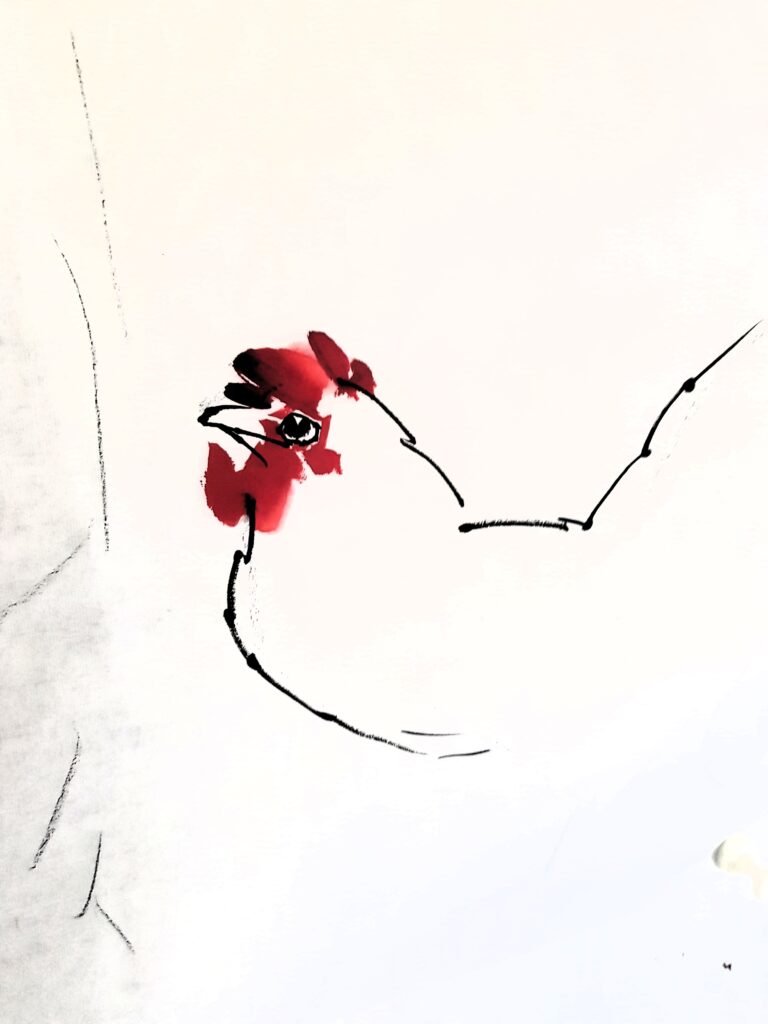
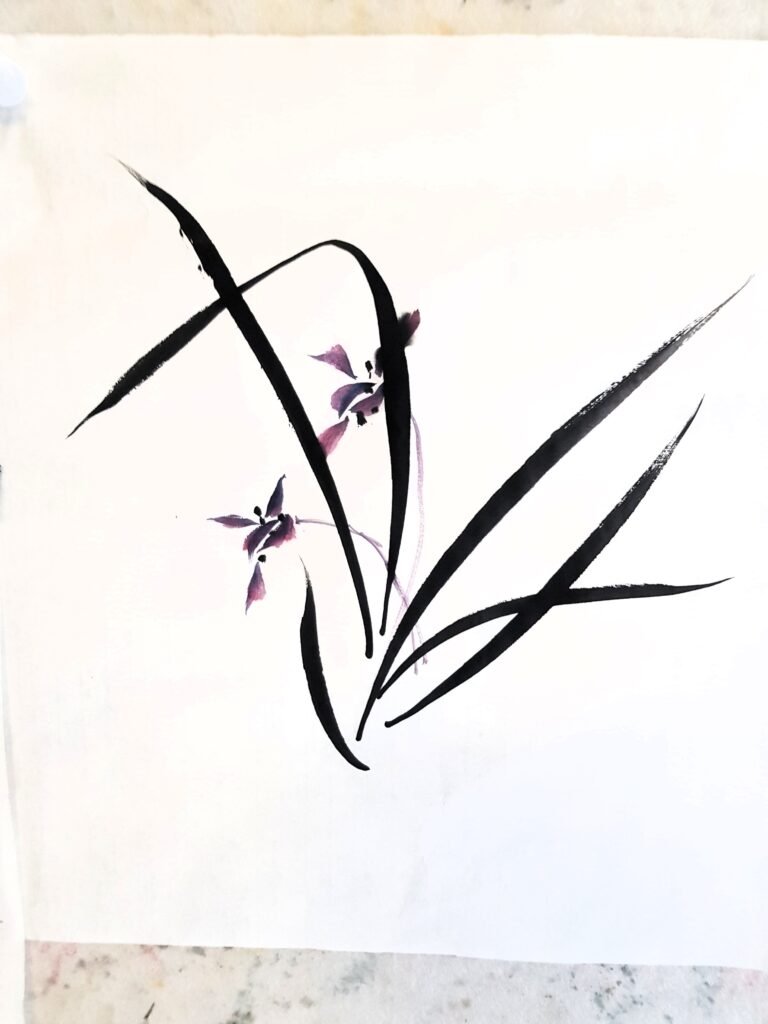
I felt moved by the generosity of Xiǎo Yàn as a teacher, who didn’t mind sharing as much as she could in the time we had. I adored Mr Yang, who appeared from the bedroom to cook us lunch. This wasn’t in the original agreement – I had dumplings with them on Day One but was then supposed to be going to a café for something to eat at lunchtime on the other four days – but when they realised that I LOVE Chinese food and would literally eat anything, Mr Wang cooked for us and I was invited to stay and eat with them on all five days:
Day One – Pork dumplings
Day Two – Steamed pork, amaranth greens, brown ear mushrooms and egg
Day Three – I didn’t remember to write it down! Stir fry noodles, I think.
Day Four – Steamed perch with three different vegetable side dishes
Day Five – Soya beans with tofu, amaranth beans, prawns, fried sticky rice balls
Mr Wang’s cooking was delicious, in the traditional Jiangnan style. “Jiangnan” means “south of the river” and refers to a geographical region in the lower Yangtze basin, renowned in China for centuries for its scenery, literary culture, and cuisine. This area is known as a “land of fish and rice” because of the fertile land surrounding the rivers and lakes; the cuisine is characterised by balanced flavours and simple, delicate dishes that bring out the best of fresh ingredients.
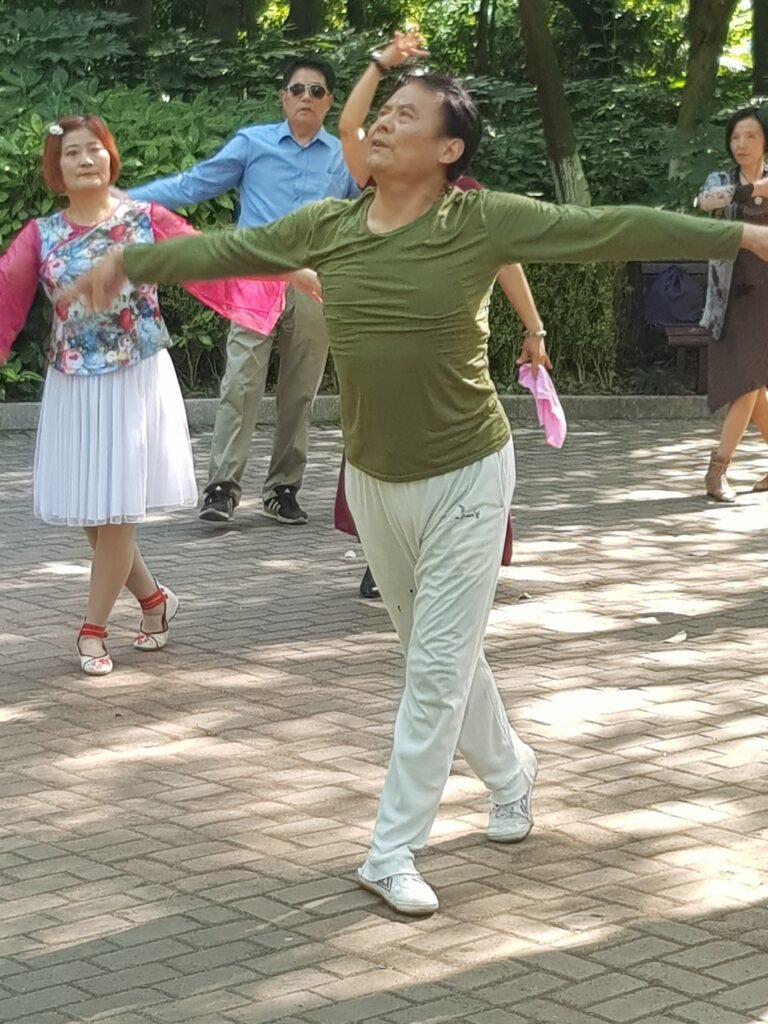
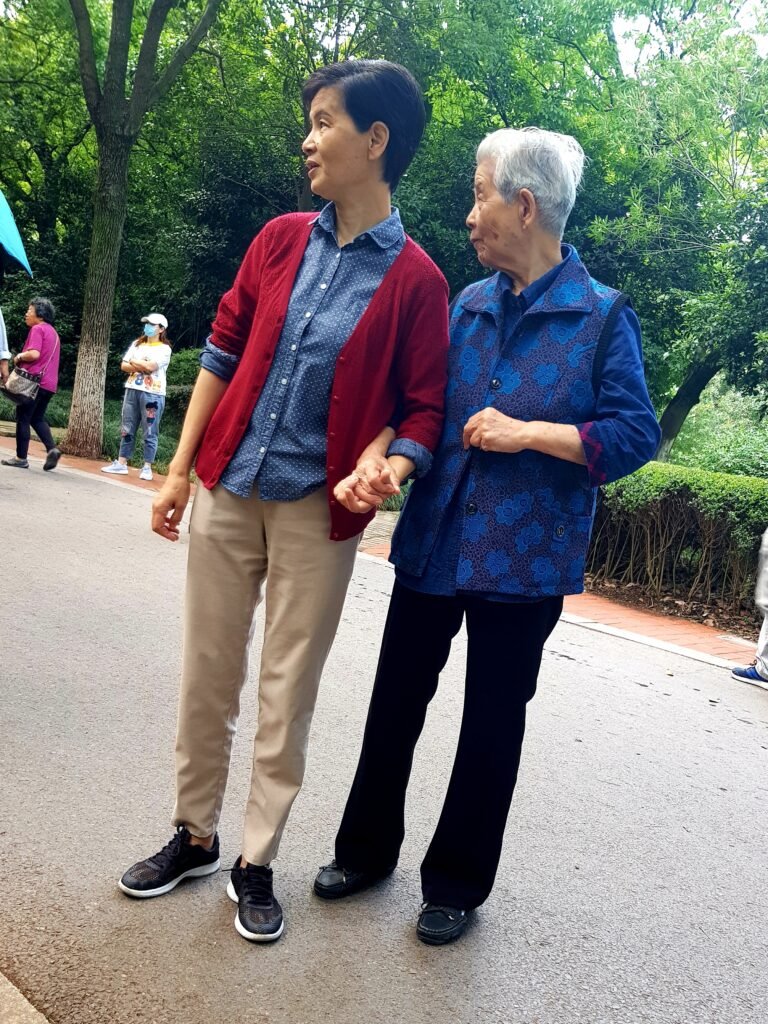
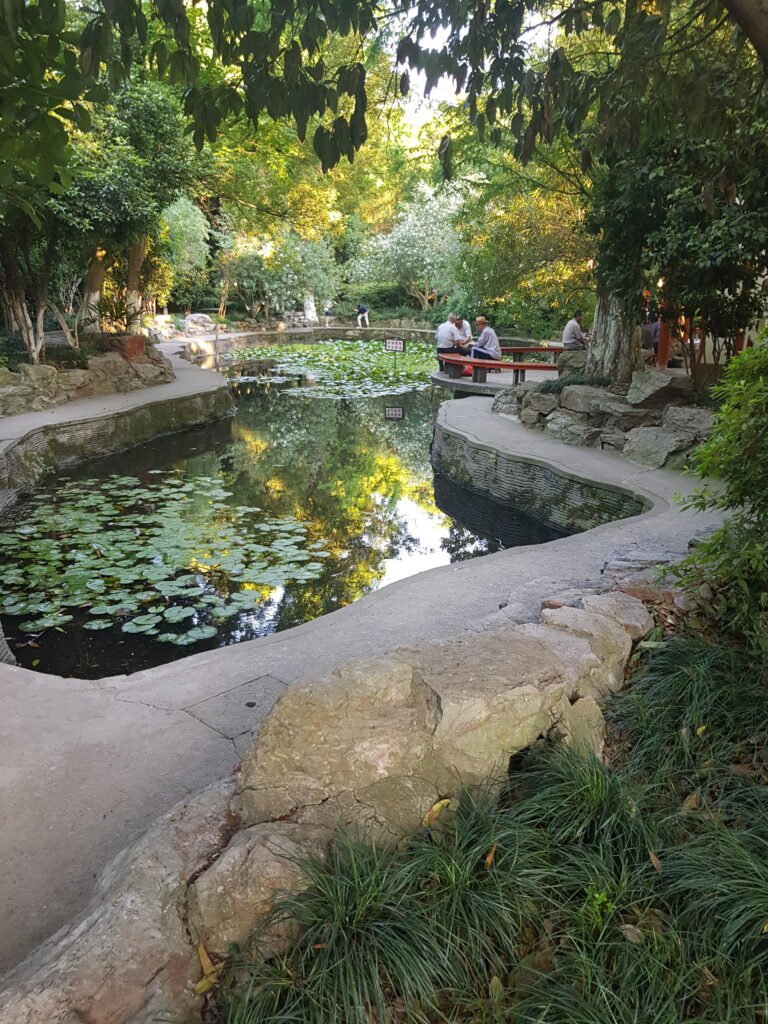
By the end of my five days in Wuhu, I had slotted into a kind of routine; I rose early and left the hotel in plenty of time to enjoy a half-hour walk round the park every morning before lesson, watching the residents of Wuhu practising dance routines or Tai Qi together whilst drinking a carton of thin yoghurt and nibbling a butter biscuit I’d bought from a food cart outside the mini supermarket. Apart from the one day of heavy downpours when I had to dash through puddles and not deviate into the park, those early mornings were a chance for me to take a breather and pinch myself that I was actually there and doing what I’d never thought I would. It took me two years to build up courage to make the trip, a lot of help and encouragement from some friends living in Shanghai, and many messages going back and forth between Xiǎo Yàn and myself using the very useful translate function in the messaging app WeChat. The whole experience, after all that nervous apprehension, couldn’t have been more perfect.
At 11:52 on Tuesday 28th May I boarded the bullet train again at Wuhu railway station and returned to Shanghai.
The adventure wasn’t quite finished; there were things to see in Shanghai, but that’s for a different blog.