
What are The Four Treasures of Chinese Brush Painting?
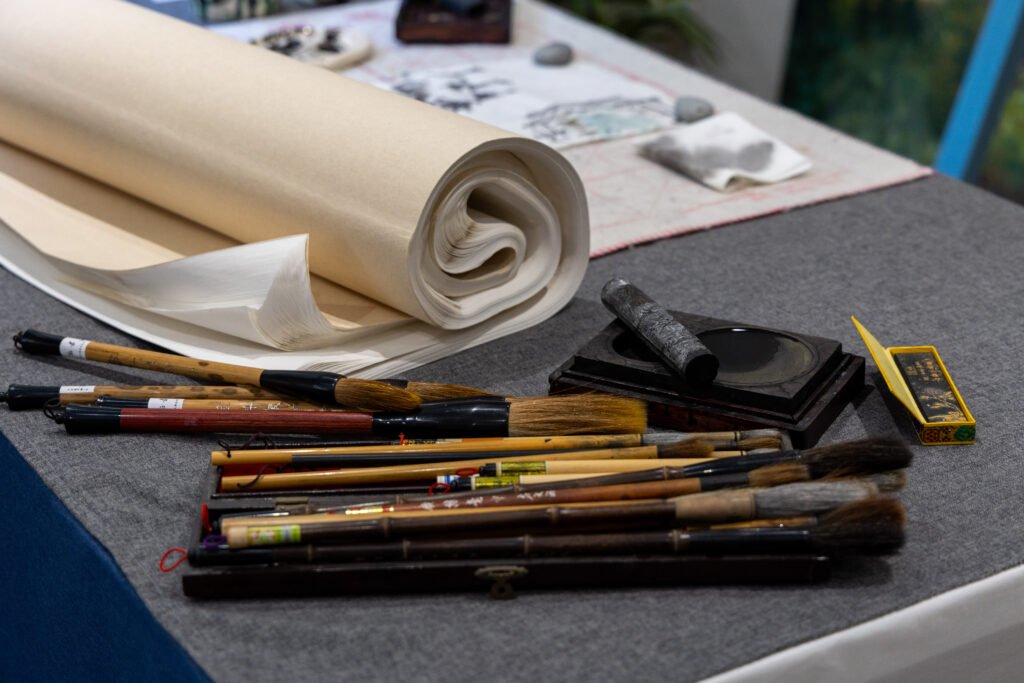
What are The Four Treasures of Chinese Brush Painting?
The essential tools and materials that no Chinese brush artist can do without.
For those of us learning the techniques of Chinese brush painting ourselves, or appreciating the skill of other Asian ink artists, it helps to understand the history and tradition behind the materials that are used.
The Four Treasures of Chinese brush painting refer to four essential items in the possession of every Chinese brush artist:
- Paper
- Ink
- Inkstone
- Brush
In this article I will explain each of the treasures in more detail:
Paper (zhǐ 纸)
Chinese brush painting began on silk, as paper wasn’t invented until the Han dynasty in around 105 CE. You might like to read my article about the Origins of Chinese Brush Painting to get an overview of how Chinese brush painting has evolved through the dynasties to the present day.
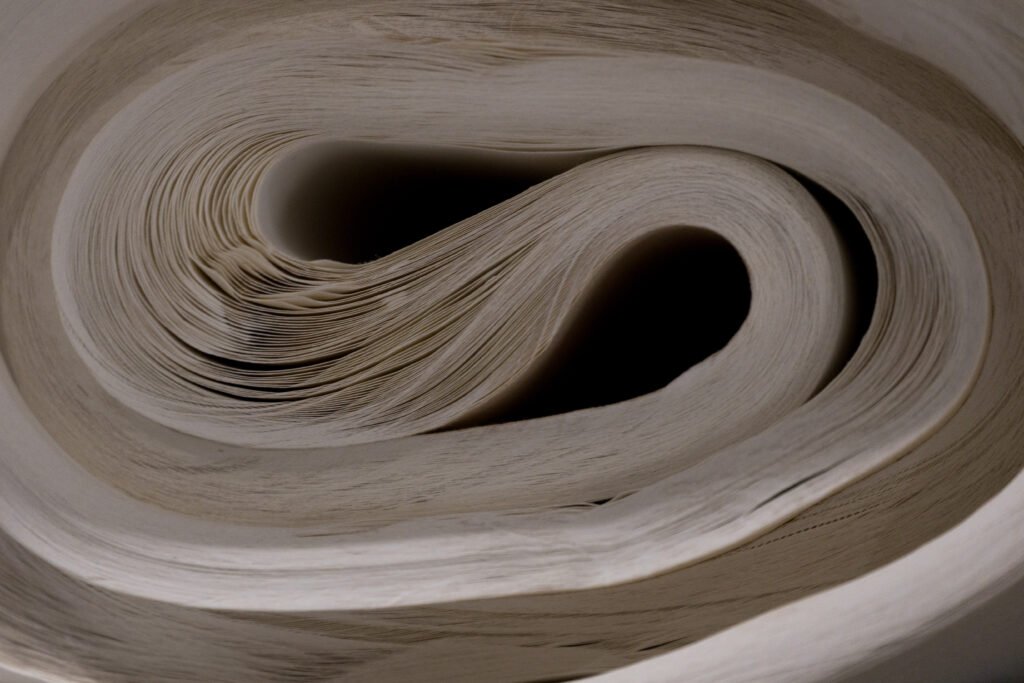
Xuan paper has become the principal paper of choice for Chinese brush artists, whether they favour the meticulous gōngbĭ painting style, or the looser, expressionistic xiěyì approach. Xuan paper is produced in Xuancheng in Jing County, Anhui province. Although in the West it is referred to as “rice paper”, the paper does not contain a single grain.
So, what is Xuan paper is made of?
Xuan paper is a blend of the bark of blue sandalwood tree (Pteroceltis tatarinowii) and rice straw (the dry stalks and leaves left after harvesting rice) with the addition of other fibres like bamboo or mulberry bark.
It takes many steps to process these raw materials into Xuan paper, which is renowned for its smooth texture, unique strength, and ability to hold ink.
Are there different types of Xuan paper?
Xuan paper can be either unsized (shēng 生), sized (shú熟), or semi-sized (bànshú 半数). Knowing whether the paper is sized or not is important because it dictates how the ink will react in contact with the paper; on an unsized piece, the ink will be readily absorbed and may also easily spread; on a sized piece, the ink will be self-contained and the ink marks clearly defined.
Fully sized paper is coated with a solution of alum, which reduces the absorbency of the paper but makes it much easier for the artist to control the ink. This type of paper is ideal for the meticulous gōngbĭ style, where tiny brushes are used to paint detailed landscapes. Semi-sized Xuan paper is coated with thin rice gruel or diluted soya bean milk so that it remains a little more absorbent but the ink diffuses less. Unsized paper can be a challenge to paint on, but the beauty lies in the serendipitous moments when ink and paper work together to produce striking effects! I like to paint in the looser Xiěyì style, so the paper I use is always unsized – aka “raw” (sheng) Xuan paper.
The process of Xuan paper making was recognized by UNESCO as a world intangible heritage in 2009. The paper making process involves over 100 manual steps and is considered an artistic creation in itself.
Ink (mò 墨)
Black ink was made from a mixture of pine soot and deer-horn resin to begin with (later, a mixture of pine soot, graphite and tree resin) and was first used around 300 BCE. Prior to the invention of black ink, artists relied solely on ground natural mineral pigments like cinnabar (red), azurite (blue), and malachite (green).
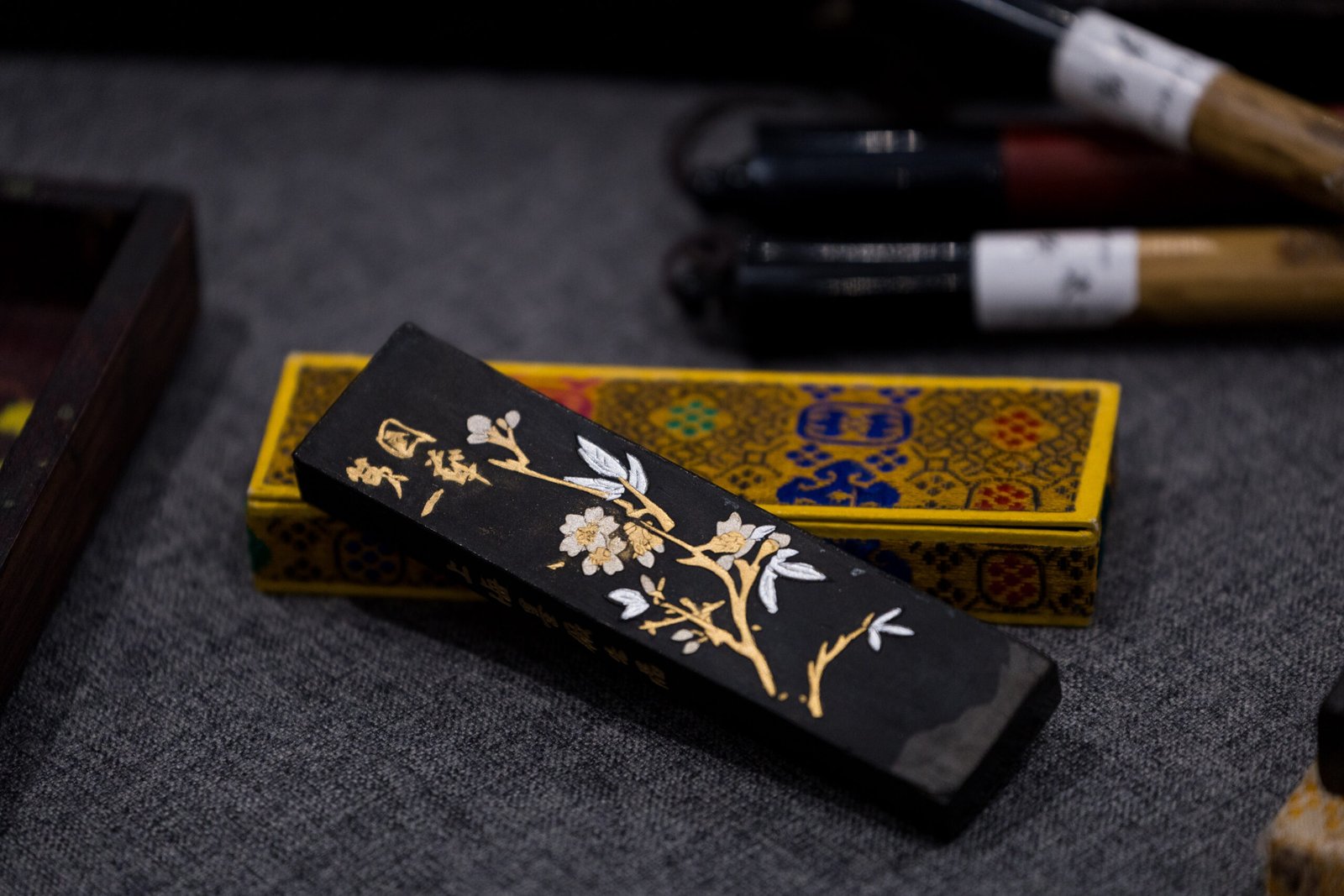
The black ink referred to as one of The Four Treasures comes in the form of an ink stick, which is ground on an ink stone with water to create a fluid ink to paint with. The coloured pigments are sometimes referred to as the fifth treasure.
Ink is dried in moulds to create the sticks, and they are often beautifully decorated, so as to become an art form in their own right. Ink sticks are collectable items, and some sticks contain crushed pearls or gold flakes!
According to tradition, you should only grind as much ink as you need at any one time; ink left overnight will dry up and diminish in quality. Chinese brush artists grind the ink to various consistencies by altering the ratio of water to ink, and these consistencies provide tonal contrast in the paintings. An accomplished painter will be able to mix up to seven different shades of ink, from darkest black to palest grey. These tones are called The Seven Colours of Ink.
Contemporary artists nowadays use a bottled pre-diluted ink, which saves a lot of time, but does not provide the benefits of the meditative ritual of grinding ink yourself.
Inkstone (yàn 砚)
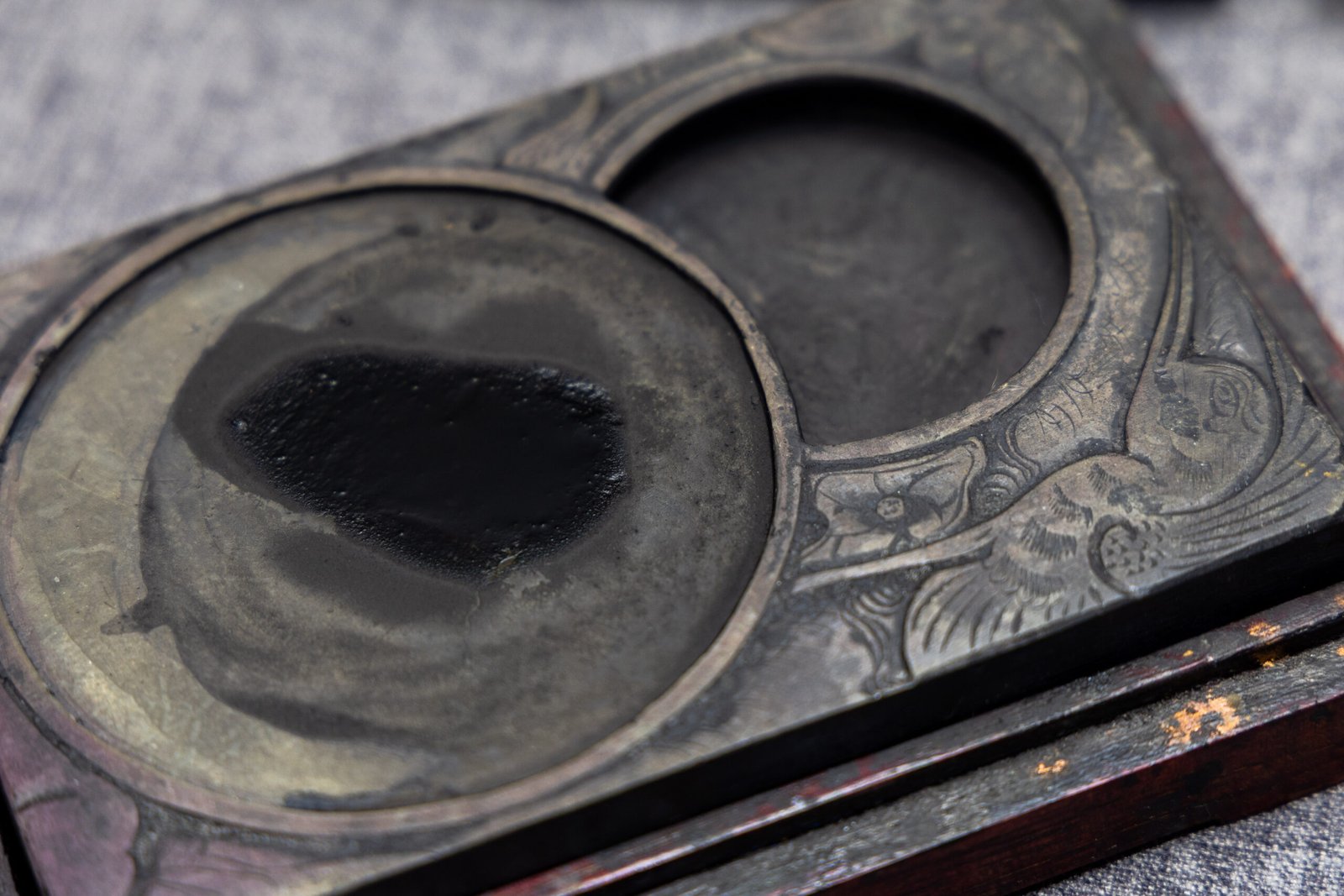
Inkstones are used to grind the ink sticks with water. They are commonly made from slate and can be rectangular or circular, decoratively carved or very plain. The stone contains a concave area designed to hold a small amount of water and the ink stick is rubbed clockwise in circular motions over the rough surface to combine with the water to form liquid ink.
The process of slowly grinding the ink stick releases a lovely pine fragrance and is a moment to savour, whilst also calming the artist and putting them in the right mindset to paint.
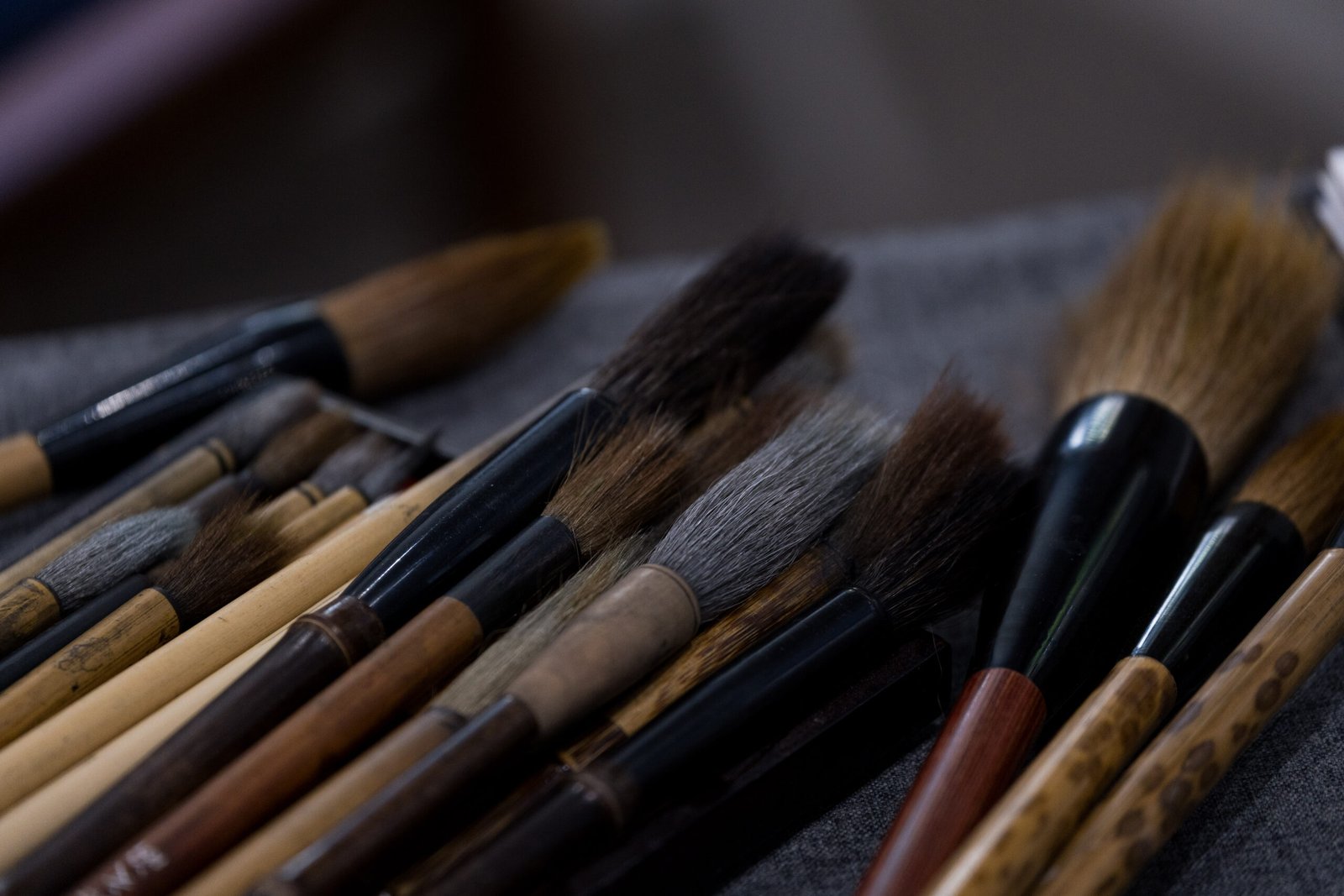
Brush (bǐ 笔)
When making their brushes, the Chinese used whatever materials they had available in their region. As a result, some early brushes were made from sheep or goat hair (in the north), and hairs from the wolf/weasel, fox or bear (in the south). Various materials were used for the handles, again according to what was available, for example wood or bamboo. The emperor’s brushes, however, would have handles made from jade, sandalwood, lacquer, ivory, or porcelain.
In the Ming dynasty (1368 – 1644 CE), brush handles were very long. This style of brush is still emulated today with “old master” brands.
New brushes arrive with the bristles stiff from glue. In order to use the brush, you must first “crack” it:
What does “cracking the brush” mean?
When you buy a new Chinese brush, it will arrive with the bristles glued together and inserted into a protective sheath. You must first remove the sheath, which should be discarded; once the brush is “cracked”, placing it in the sheath again will damage the bristles. Place the brush bristle side down in a jar of water and let it soak for about 15 minutes. This should dissolve the glue a little and enable you to manipulate the brush head gently backwards and forwards to help loosen (crack) the bristles. Continue soaking the bristles until all the glue is dissolved and the bristles are fully separated and soft.
What is so special about Chinese brushes?
Chinese brushes are extremely versatile because they are constructed with a wide “belly” that tapers to a very thin point. This means that one brush can be used to paint a wide variety of thicknesses. In principle, you should be able to paint a very fine line with a large Chinese brush just as easily as you can with a small one. I am grateful to Wang Xiǎo Yàn (read my article about painting chickens in China) for giving me confidence to paint with a much larger brush than I’d previously dared. The versatility of the strokes I was able to make increased exponentially day by day, purely as a result of upgrading my brush size.
Chinese brush artists learn to hold the brush in particular postures – from the very tip, to the belly, on the side, or stroking the brush away or towards them – to either sketch outlines, paint leaves or bamboo stems, and many other subjects. Combined with this, the artist controls the amount of water and ink on the brush to vary wet and dry textures in the ink marks.
When preparing to paint, Chinese artists lay out their four treasures reverentially in a clutter-free space. It’s important to clear your mind of visual distractions while you grind the ink and become mindful.
Mindfulness is an important aspect of Chinese brush painting, and I write more about this and the neuroscience behind creativity in another article.